Solo show at the Chilliwack Museum and Archives


I inherited a bag of trims. She used them to improve her clothing and some household items. She figured I could use them and if I was able to use them, I wouldn’t waste them. “Put them on the kids’ clothing,” she said, “you sew, you’ll know what to do.” She would even remove trim before discarding a well-loved outfit. Out of love, I took it. Out of devotion I laid down my thinking at her feet and allowed myself- begged myself- to accept hers. I made things out of scraps now to re-purpose, carry on a tradition. This skill is a gift of the matriarchy. Recycling is like harvesting and growing seeds.
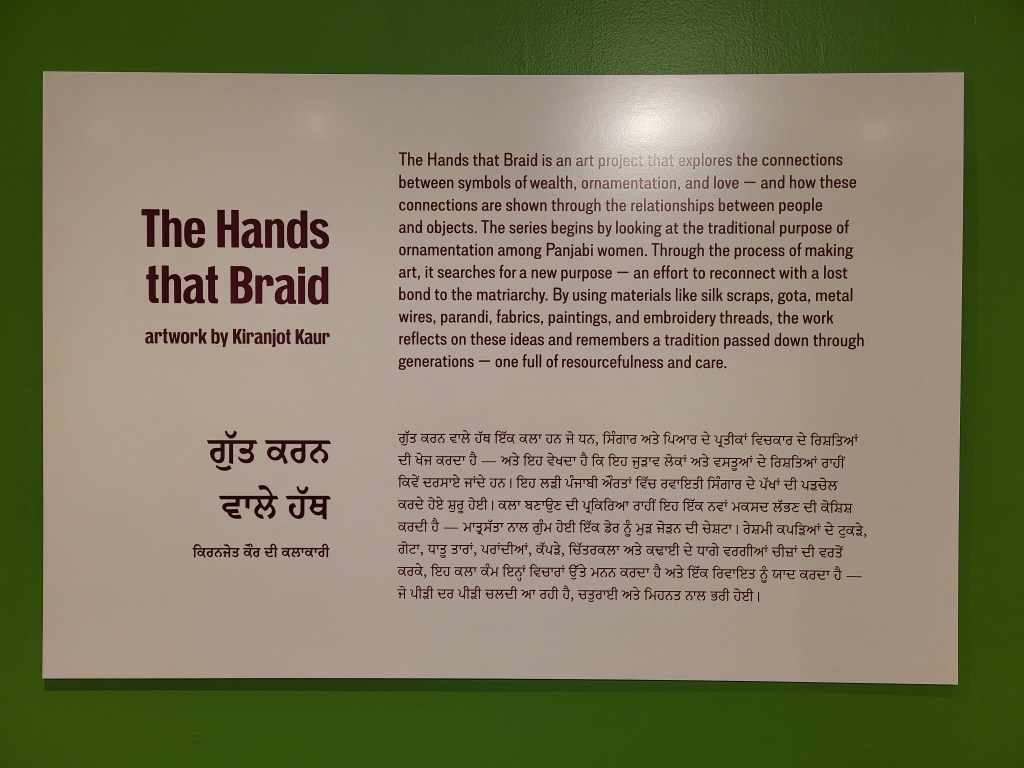
The Hands that Braid is an art project that explores the connections between symbols of wealth, ornamentation, and love — and how these connections are shown through the relationships between people and objects. The series begins by looking at the traditional purpose of ornamentation among Panjabi women. Through the process of making art, it searches for a new purpose — an effort to reconnect with a lost bond to the matriarchy. By using materials like silk scraps, gota, metal wires, parandi, fabrics, paintings, and embroidery threads, the work reflects on these ideas and remembers a tradition passed down through generations — one full of resourcefulness and care.
 Kiranjot Kaur